At a moment marked by war, political uncertainty, and the fragility of public life in Iran, the continuation of cultural work carried significance beyond the immediate framework of exhibitions. The seventh anniversary program of Hasht Cheshmeh Art Space, which unfolded across several spaces in the Iranian city of Kashan, therefore became more than the celebration of one initiative. It was a statement about cultural work, self-organization, and the capacity of contemporary art to persist under pressure.
Opened on 11 June 2026 and presented over the following month, the program brought together eight exhibitions and artistic projects across Hasht Cheshmeh Art Space, Kashan Gallery / House of Steve, Honarkhaneh Kashan / House of Lucie, Golkhaneh – Alternative Cultural Space, and Sooleh Art Space. Located within Kashan’s historic fabric, these venues formed a constellation of self-initiated contemporary art spaces that had developed over seven years through restoration, adaptive reuse, and new cultural programming. Together, they offered one of the most active examples of independent contemporary art infrastructure outside Tehran.
For mohit.art, Kashan is not a recent discovery. The relationship goes back to February 2019, when Bernd Fechner first visited Kashan, and to December 2021, when mohit.art presented Photobook Emroozeh at Hasht Cheshmeh Art Space in cooperation with Emkan Gallery and the German Photobook Award. It continued through The Photobook in Cultural Dialogue, which connected Kashan and Cologne and brought Hassan and Hossein Rowshanbakht to Forum für Fotografie to present their work.
Several spaces central to the anniversary program are also part of the mohit.art NETWORK: Hasht Cheshmeh Art Space, Kashan Gallery / House of Steve, Honarkhaneh Kashan / House of Lucie, and the Zarabi Library. The anniversary therefore became both a local event in Kashan and a point of reflection within mohit.art’s long-term work on transnational dialogue, cultural infrastructure, and contemporary art in and beyond Iran. As a mohit.art EXHIBITION contribution, the article documents the program while also situating it within the wider function of the mohit.art NETWORK: not as a static directory, but as a framework for visibility, sustained personal relations, and durable cultural exchange.
Contemporary art in Iran is often viewed through the institutional, commercial, and intellectual centrality of Tehran. The capital remains the main reference point for galleries, collections, universities, critics, and international visibility. Yet in recent years, other cities have increasingly become sites where new forms of artistic activity emerge. Kashan is one of these places.
The significance of Kashan lies not only in its historical architecture or in the number of exhibitions staged there. It lies in the way contemporary art has been embedded into the existing urban and cultural fabric of the city. The activities around Hasht Cheshmeh Art Space show how independent art spaces can develop outside the capital not as isolated venues, but through buildings, audiences, collections, archives, learning formats, and recurring programs. In urban terms, they point to a form of cultural regeneration: not master planning from above, but a gradual reactivation of places through use and the continuous presentation of contemporary art.
This mattered in the political situation in which the anniversary program took place. War and instability affect not only borders and economies, but also the very conditions that make cultural work, collaborations, and exchanges possible. They also affect everyday forms of gathering, artistic production, and the personal relationships on which cultural work depends. Against this background, sustaining independent cultural spaces becomes both vulnerable and essential.
The relationship between mohit.art and Kashan was shaped early through the medium of the photobook. In 2021, with Photobook Emroozeh, mohit.art presented a selection of submissions to the German Photobook Award at Hasht Cheshmeh Art Space. The project, developed with Emkan Gallery in Tehran, was not simply an exhibition of books. It addressed a larger imbalance in the international history of photography, where photographic cultures from Iran and neighboring regions have often been marginalized or overlooked.
The later program The Photobook in Cultural Dialogue continued this line of work. It brought the Rowshanbakht brothers into dialogue with Dr. Norbert Moos from Forum für Fotografie in Cologne, moderated by Bernd Fechner. The event framed Kashan as a ‘photo city’ and related it to Cologne, another city with a strong photographic history and institutional memory. This earlier cooperation is important for understanding the anniversary program: mohit.art’s interest in Kashan was rooted in photography, cultural translation, and durable relationships between Iran and Europe.
The Hasht Cheshmeh Art Space project began in 2019 through a collaboration between Hassan and Hossein Rowshanbakht and Hossein Farmani. Its first phase led to two spaces: Kashan Gallery, also known as House of Steve, and Hasht Cheshmeh Art Space. As the first professional venue dedicated to visual arts in Kashan, Hasht Cheshmeh Art Space sought from the outset to contribute to the emergence of a cultural and artistic movement in the city.
In retrospect, this development can be understood as part of what Hassan and Hossein Rowshanbakht describe as the ‘Kashan Model’: a long-term approach in which contemporary art, adaptive reuse, and the social reactivation of historical urban fabric are treated as interdependent rather than separate fields.
It did so through collaborations with Iranian and international artists, educators, and cultural practitioners, and through projects for young artists from Kashan. The local dimension was central: Hasht Cheshmeh Art Space was not conceived simply as a place where contemporary art could be shown, but as a professional context in which artistic relationships could develop over time while connecting Kashan to broader conversations in Iran and beyond.
The trajectory continued in 2022 with Honarkhaneh Kashan / House of Lucie. In the same year, Sooleh Art Space opened as another key element in Kashan’s expanding cultural constellation. In 2024, Golkhaneh – Alternative Cultural Space was established as a functioning greenhouse and alternative cultural space, introducing ecological and experimental approaches into the city’s contemporary art infrastructure. Together, these spaces marked a cumulative process through which former houses, workshops, gardens, and abandoned urban sites were returned to cultural and social use.
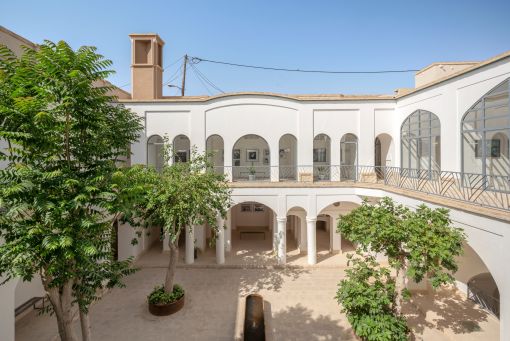
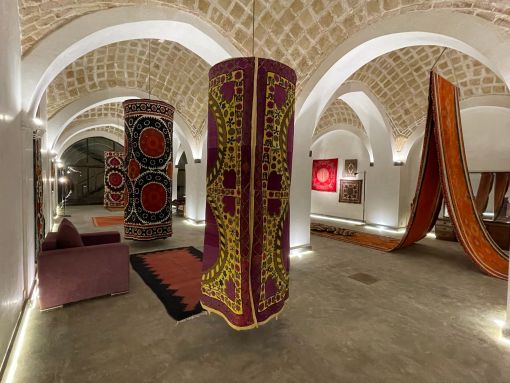
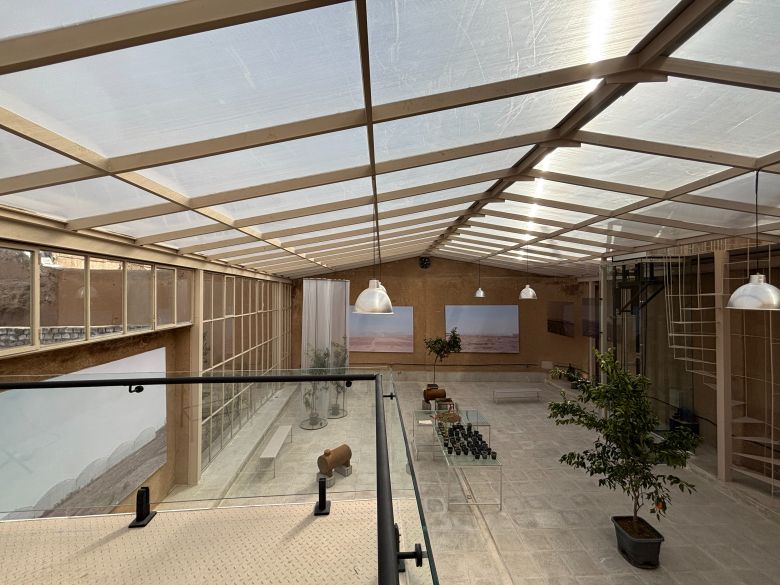
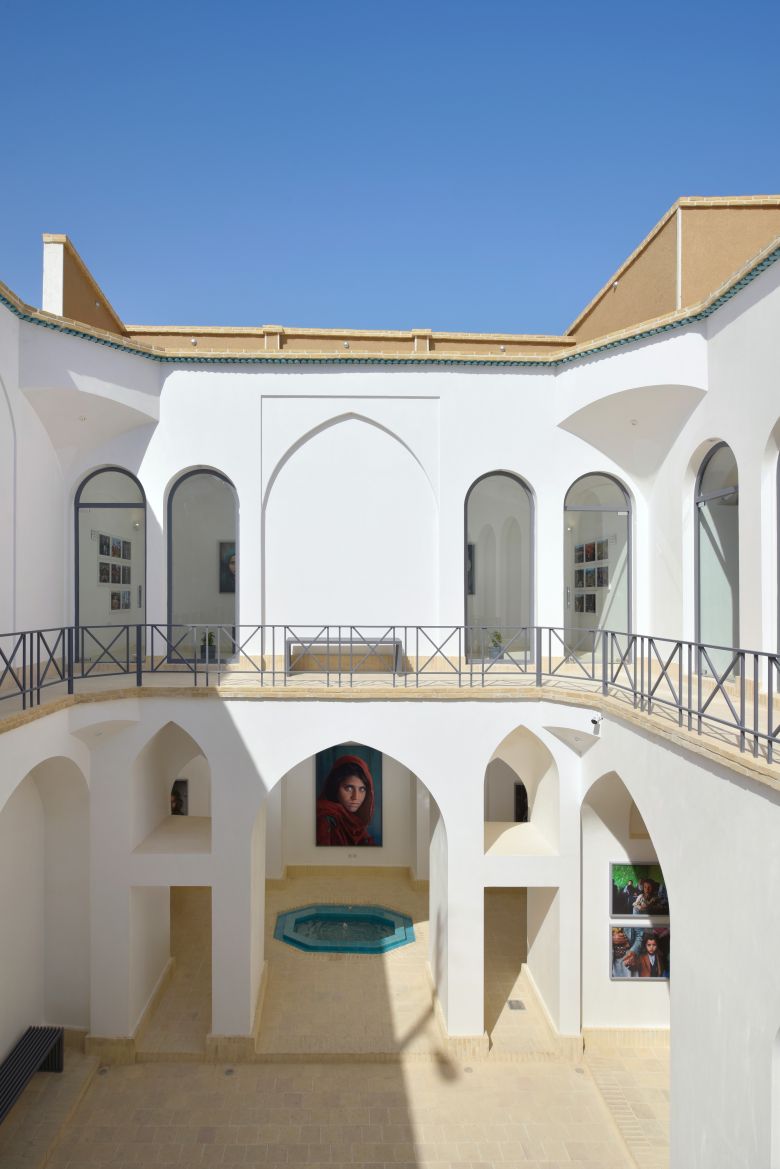
These spaces are located within Kashan’s historic fabric. Their restoration and adaptive reuse preserve the historical character of the buildings while introducing contemporary layers of use, display, education, collection, experimentation, and public gathering. The result is not a single institution, but a network of spaces that has evolved into a platform for collaboration among artists, photographers, writers, and audiences.
The anniversary program also showed how the mohit.art NETWORK can function as more than a directory. It made visible relationships, places, histories, and forms of cooperation that had developed over time. In the NETWORK, Hasht Cheshmeh Art Space appears as an art space and gallery in Kashan, located in a renovated silk weaving factory and established to support young talents in their engagement with contemporary art.
Kashan Gallery / House of Steve is presented as a private museum dedicated to the photographic work of Steve McCurry and situated in a redesigned Qajar house. Honarkhaneh Kashan / House of Lucie expands this photographic context through temporary exhibitions and international photography networks. The Zarabi Library, founded by Homa Zarabi in 2018, adds another crucial layer: a public collection of books on art, photography, and Iranology, located in a renovated traditional Kashan house.
Homa Zarabi is a collector, cultural patron, and long-standing figure in the field of contemporary Iranian visual arts. Since the 1970s, she has been closely connected to artistic circles in Iran and has played an important role in preserving, collecting, and contextualizing Iranian art and material culture. Coming from an old Kashanian family whose history reaches back several centuries, her engagement with the city is also rooted in a deeper family and cultural history. Her holdings include an important family collection of calligraphy as well as textiles, embroidery, ceramics, pottery, and other forms of Iranian craft and decorative art. Through the Zarabi Library and the presentation of her private collection at Sooleh Art Space, her work adds a historical, scholarly, and material dimension to Kashan’s contemporary art constellation.
Together, these entries describe Kashan not as a marginal site, but as a dense cultural environment. The mohit.art NETWORK links institutions, collections, artistic spaces, public resources, architecture, and people. It makes visible how contemporary art, places, institutions and people intersect in one city.
Kashan’s historic fabric is often associated with memory, preservation, and architectural heritage. Hasht Cheshmeh Art Space and its related spaces approached this context differently. They did not treat historical architecture as a static background; they activated it as living infrastructure. Historical buildings were preserved through renewed activity, and their value became social as well as architectural. This approach corresponds to a broader debate in contemporary architecture and urban planning, in which heritage is no longer understood only as a protected object, but as a spatial and social resource that can be reinterpreted through use.
For contemporary art, this created a particular situation. The encounter with artworks was never detached from the environment in which they were presented. Moving through the Hasht Cheshmeh Art Space network meant moving through rooms, courtyards, rooftops, greenhouse structures, and restored houses that carried different layers of memory. The exhibition experience became inseparable from the city itself. Space was not merely used; it was produced through movement, perception, memory, and shared presence.
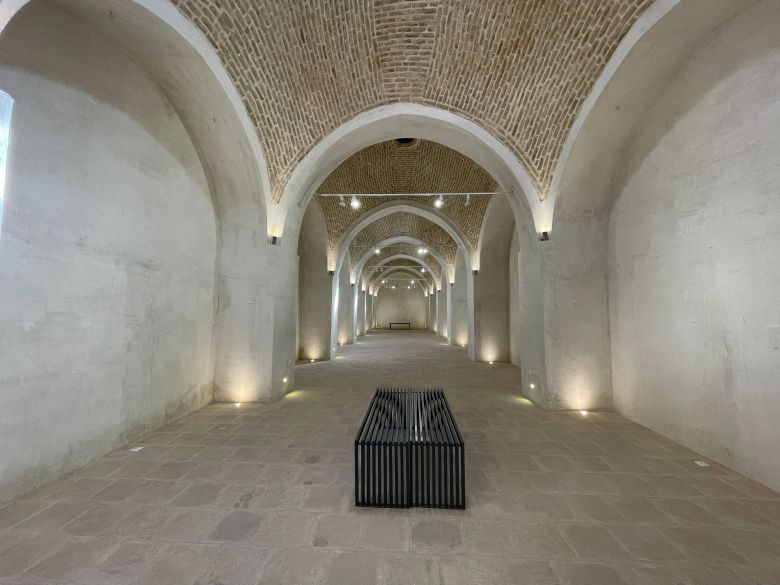
Hassan and Hossein Rowshanbakht led the design and restoration processes of the projects discussed here, approaching each intervention through a contemporary architectural perspective. Their work was based on rethinking Iranian architectural heritage through new cultural functions, especially the presentation of contemporary visual art. Existing structures were preserved where possible, while contemporary architectural layers – steel, glass, concrete, circulation elements, exhibition infrastructure, lighting, and new spatial sequences – were introduced as legible additions. The aim was not to reconstruct an idealized past, but to allow different historical layers to remain readable while opening the buildings to new forms of public use.
Curated and designed by Hassan and Hossein Rowshanbakht, the seventh anniversary program unfolded across Hasht Cheshmeh Art Space, Kashan Gallery / House of Steve, Honarkhaneh Kashan / House of Lucie, Golkhaneh – Alternative Cultural Space, and Sooleh Art Space. By presenting eight exhibitions and artistic projects simultaneously, it created a form of movement through Kashan’s old city. The program functioned as a temporary urban itinerary, connecting dispersed spaces through walking, orientation, encounter, and repeated acts of return.
Audiences moved from one space to another, from archival material to sculpture, photography, textile work, installation, and documentary image. This movement was not only logistical. It produced an experience of the city as an exhibition network and made visible the relationships among venues, artistic media, generations, memories, and publics.
On the lower floor of Hasht Cheshmeh Art Space, Memory and Reworking presented a project based on the archive of exhibition posters produced over seven years. Artists who had contributed to the identity of the space were invited to revisit, reinterpret, or rework their original posters. The participants included Fereydoun Ave, Bita Fayyazi, Masoumeh Mozaffari, Nosratollah Moslemian, Fatemeh Emdadian, Pariyoush Ganji, Maryam Salour, and Ahmad Morshedloo.
Rather than functioning as a conventional archival survey, the exhibition treated the poster as both document and material. The posters recorded the history of exhibitions, but they were reactivated through artistic intervention. On the upper floor, Sahand Hesamiyan’s nine-meter sculpture Kanoon introduced another register of scale and spatial presence, shifting the program from memory and documentation toward a direct sculptural encounter.
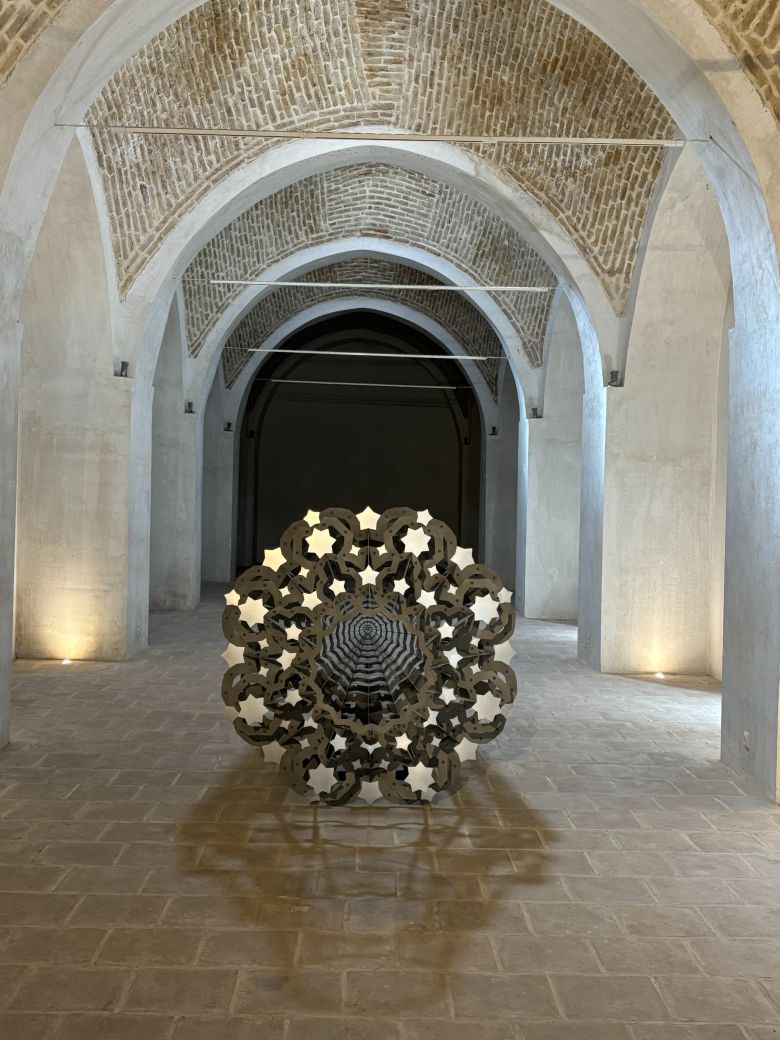
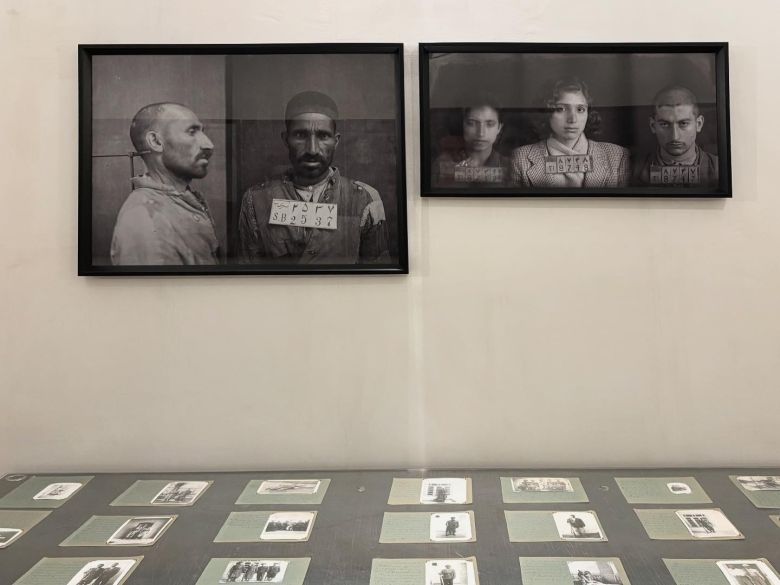
At Kashan Gallery / House of Steve, the anniversary program presented exhibitions by Bahman Kiarostami and Bijan Seyfouri. Kiarostami’s Rebels of Khorasan was developed from a book of the same title published by Nazar Art Publication. Based on archival documents from a police station in Quchan, Khorasan Province, during the 1950s, the project opened a space between documentary research, archival presentation, and historical memory.
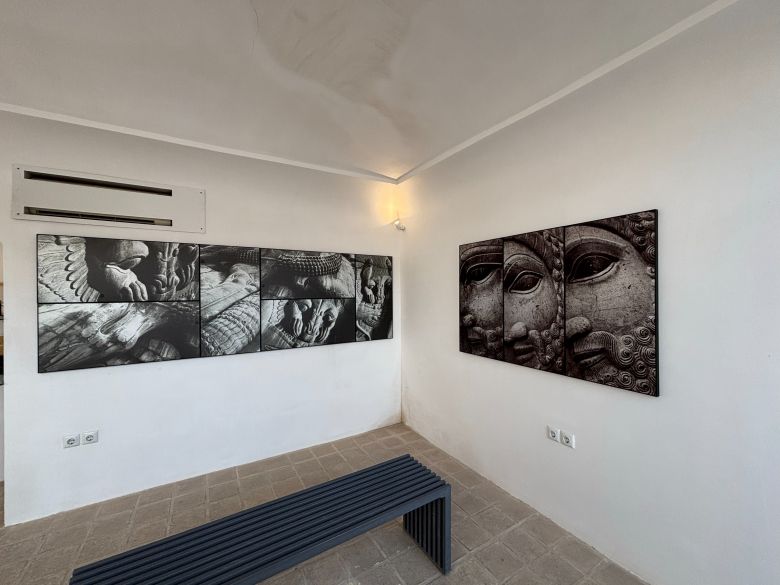
Bijan Seyfouri presented Neostalgia, a photographic series created through images taken at Persepolis. Photography engaged here with one of Iran’s most symbolically charged historical sites. Together, the two exhibitions brought archival documents and monumental imagery into dialogue, addressing different forms of historical consciousness: the bureaucratic archive, the archaeological site, the photograph, and the public act of looking.
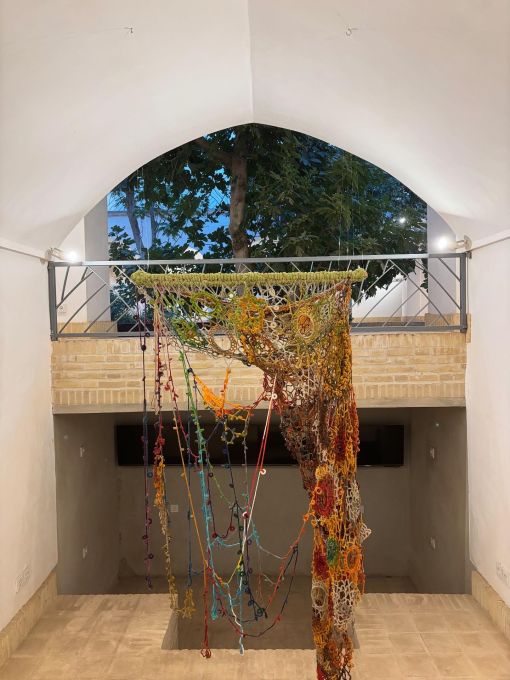
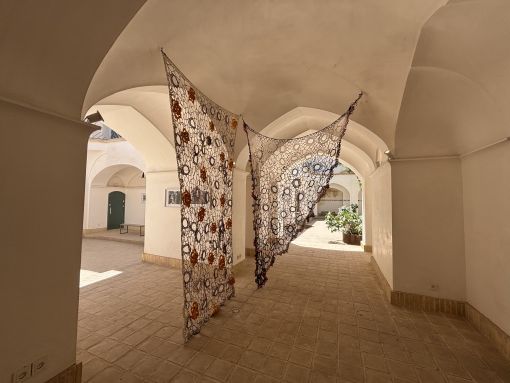
At Honarkhaneh Kashan / House of Lucie, textile artist Nargess Hashemi presented her exhibition, while Kaveh Kazemi’s photography was presented in a slideshow of photographs from the Iran-Iraq War. Hashemi’s textile-based practice introduced questions of surface, pattern, labor, and embodied memory. Kazemi’s photographs returned to the visual history of war and its long afterlife in Iranian collective consciousness.
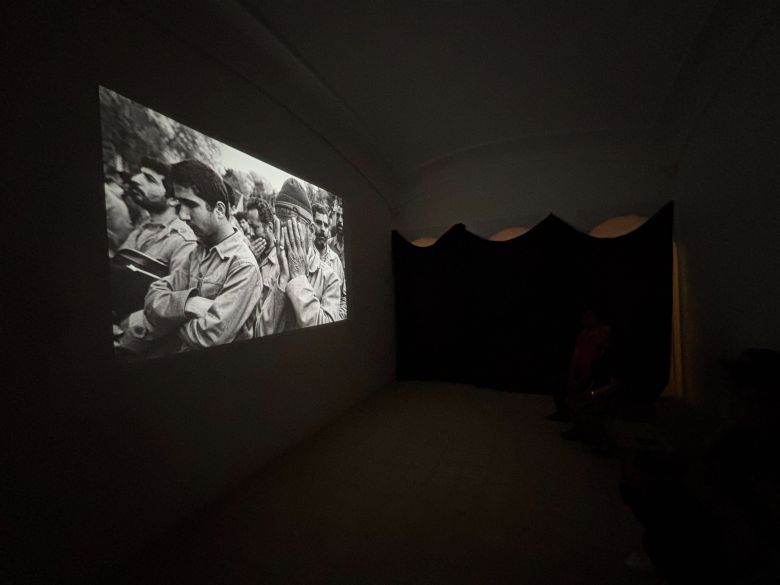
In the political moment in which the anniversary program took place, photographs from the Iran-Iraq War carried particular weight. They did not only refer to a historical conflict; they resonated with renewed experiences of war, insecurity, and vulnerability. Within the wider program, the slideshow became a reminder that contemporary art infrastructure does not exist apart from political history. It can offer a place where memory, trauma, and public reflection are approached through images.
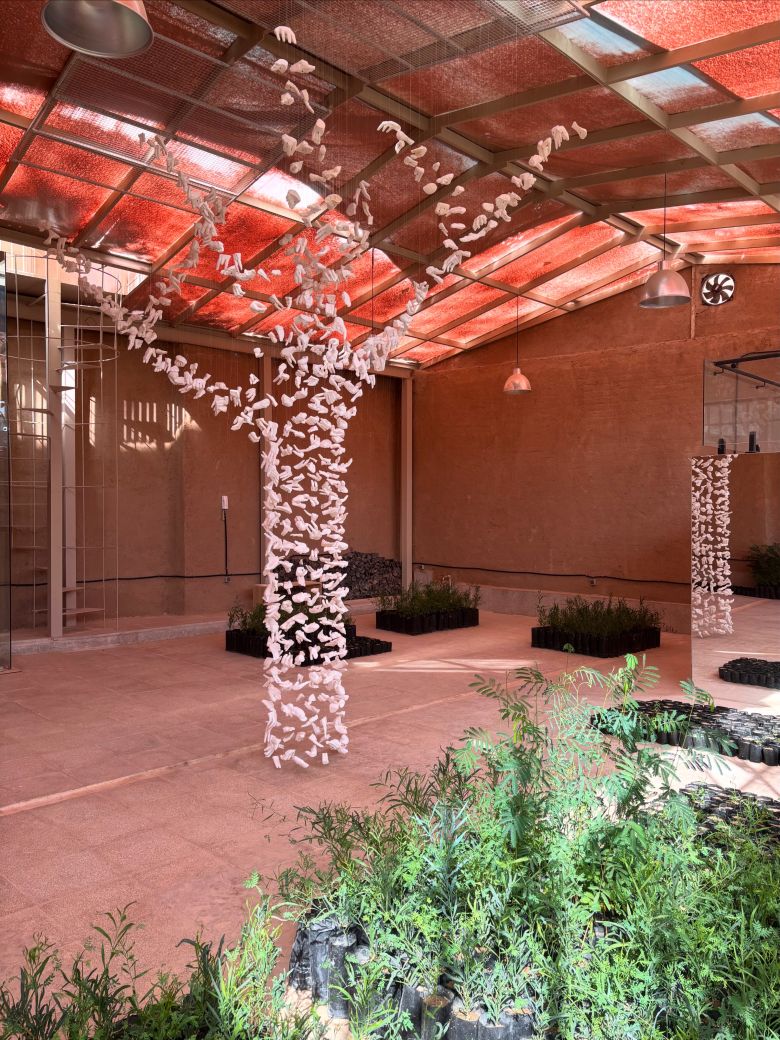
Golkhaneh – Alternative Cultural Space hosted Invisible Rain, an installation by Behdad Lahouti. The work consisted of 3D-printed plastic fragments shaped after severed parts of hands and feet and assembled into the form of a leafless tree. Installed inside an active greenhouse and placed among living plants, the sculpture produced a layered dialogue between organic and artificial life, bodily fragmentation, ecological fragility, and regeneration. Its meaning depended strongly on the site: the coexistence of a constructed, wounded tree with the living environment of the greenhouse created an atmospheric relationship that could hardly emerge within a conventional gallery.
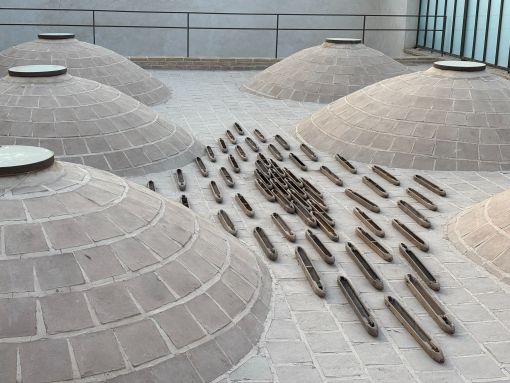
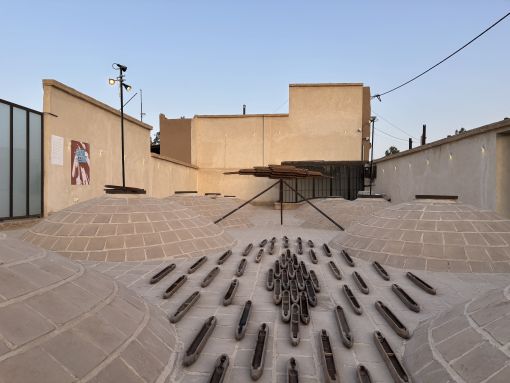
On the rooftop of Sooleh Art Space, Mohammad Mehdi Vazirpour presented Karkhaneh. Sooleh Art Space itself is located in a former silk-spinning workshop that had long remained abandoned before being transformed into a space for contemporary art. Its main focus is the presentation of Homa Zarabi’s private collection, which brings together Iranian material culture, historical textiles, embroidery, ceramics, pottery, calligraphy, and other forms of craft and decorative art. The architectural transformation preserved the industrial character of the workshop while adding contemporary layers of steel, glass, and concrete. Rather than concealing the building’s former use, the intervention kept its industrial memory legible. Vazirpour’s rooftop installation extended this dialogue between industrial memory, urban space, and contemporary artistic practice.
Hassan and Hossein Rowshanbakht have described their effort not simply as organizing exhibitions, but as shaping spaces that enable dialogue, social exchange, collaboration, and human and professional relationships. This offers a key to the entire project. Hasht Cheshmeh Art Space was not only an exhibition platform; it functioned as a social and spatial structure.
Working in Kashan never meant merely using a historic urban setting. Architecture, programming, and engagement with the local community were developed together. This integrated approach makes Hasht Cheshmeh Art Space relevant as a case study: it demonstrates that independent contemporary art initiatives can emerge beyond Tehran when they are rooted in long-term relationships, sustained collaboration, architectural care, and a clear understanding of place.
The project’s continuity also depended on trust, friendship, and support, including the commitment of Homa Zarabi and Hossein Farmani. mohit.art adds its own gratitude here: for the long-standing cooperation and friendship with Hassan and Hossein Rowshanbakht, for the trust that made shared projects possible, and for the continuing connection with Kashan as one of the most important sites within the mohit.art NETWORK.
The seventh anniversary of Hasht Cheshmeh Art Space coincided with a period of political pressure, war, and uncertainty in Iran. Against this backdrop, the continuity of independent cultural initiatives took on added significance. To continue opening exhibitions, reactivating buildings, inviting artists, gathering audiences, and producing shared experiences was not a neutral act. It was a way of maintaining cultural agency. It insisted that contemporary art is not a luxury added after stability has been achieved, but one of the practices through which societies process instability, preserve memory, and imagine continuity.
This should not romanticize cultural work under difficult circumstances. Independent initiatives are not only fragile; they are often directly exposed to political pressure, economic precarity, and the risk of interruption. Precisely for this reason, they deserve careful attention. They show how cultural infrastructure is built not only through large institutions, but through sustained acts of care, maintenance, programming, and collaboration.
Seven years after its beginning, Hasht Cheshmeh Art Space appeared not only as an exhibition venue, but as part of a wider ecology of contemporary art in Kashan. Its anniversary program made visible how artistic infrastructure can develop outside dominant centers and how historical urban environments can become active sites of present-day cultural production.
In Kashan, architecture, memory, exhibition-making, photography, books, archives, collections, and social exchange formed a shared cultural practice. The eight exhibitions of the anniversary program did not simply document the past seven years. They demonstrated what had been built: a network of spaces, relationships, and artistic possibilities.
For mohit.art, this is also a reminder of why networks matter. The mohit.art NETWORK is not only a tool for visibility. It is a way of tracing relations, supporting cooperation, and acknowledging cultural work that is often sustained outside dominant institutional centers. Kashan shows how such networks become concrete: through places, people, exhibitions, libraries, archives, collections, and long-term collaboration.
As a case study in independent cultural infrastructure in Iran, Hasht Cheshmeh Art Space points to a broader question: how can contemporary art continue under conditions of political rupture, economic difficulty, and social uncertainty? The answer offered by Kashan was neither simple nor abstract. It lay in buildings whose historical substance was not merely preserved, but reactivated through use; in artists returning to rework their own histories; in archival documents being shown publicly; in photographs of war being revisited; and in experimental installations occupying greenhouses and rooftops. In this sense, Kashan matters because it shows that the persistence of contemporary art is not an abstract idea: it takes shape through places kept active, relationships kept visible, and futures kept imaginable.
Hasht Cheshmeh Art Space’s next exhibition runs from August 28 to September 27, 2026, a group exhibition of prints by Iranian artists curated by Fereydoun Omidi.
Bernd Fechner, “Hasht Cheshmeh Art Space as a Case Study in Independent Cultural Infrastructure in Iran,” in mohit.art Publication; published on www.mohit.art, August 20, 2026.
